

Semester at Sea: My Experience, Advice, Pros + Cons
Instead of taking a job or going for a master’s degree right out of college, I made the decision to travel the world. I wasn’t quite sure what I wanted to do after graduating college, but after some searching, I landed on Semester at Sea by searching up post-grad travel opportunities on Google.
If you aren’t familiar, Semester at Sea is a four month long water vessel voyage, allowing it’s passengers to visit a number of places around the world in a pretty short period of time. A major part of what drew me to the program was the fact I could take classes on board and continue to learn the topics I’m most interested in. So, four months after graduation day, my bags were packed and I flew to Amsterdam with family to board the ship for a journey of a lifetime. If you yourself are curious about the program or wondering if you should do it, this blog is for you.


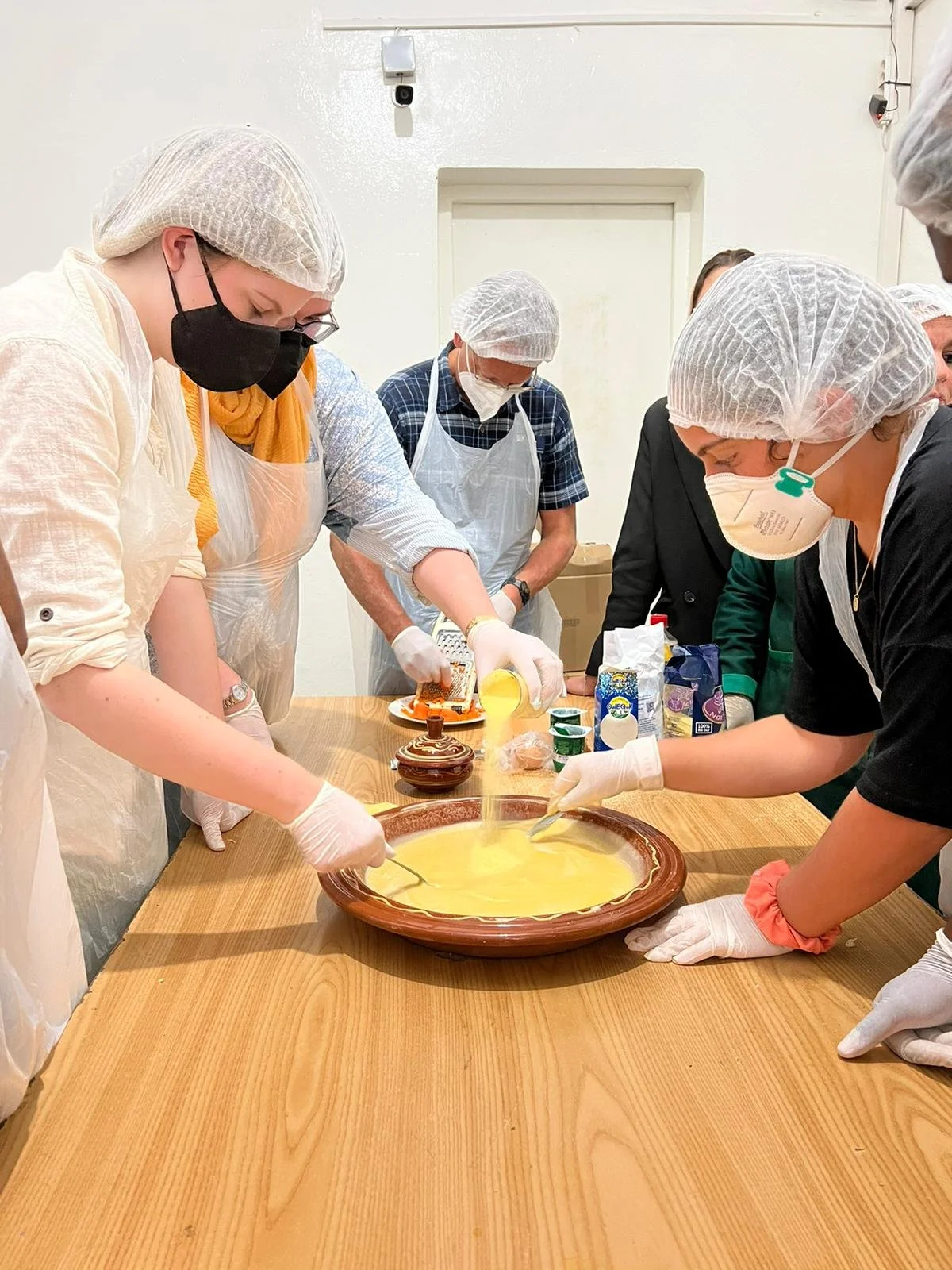



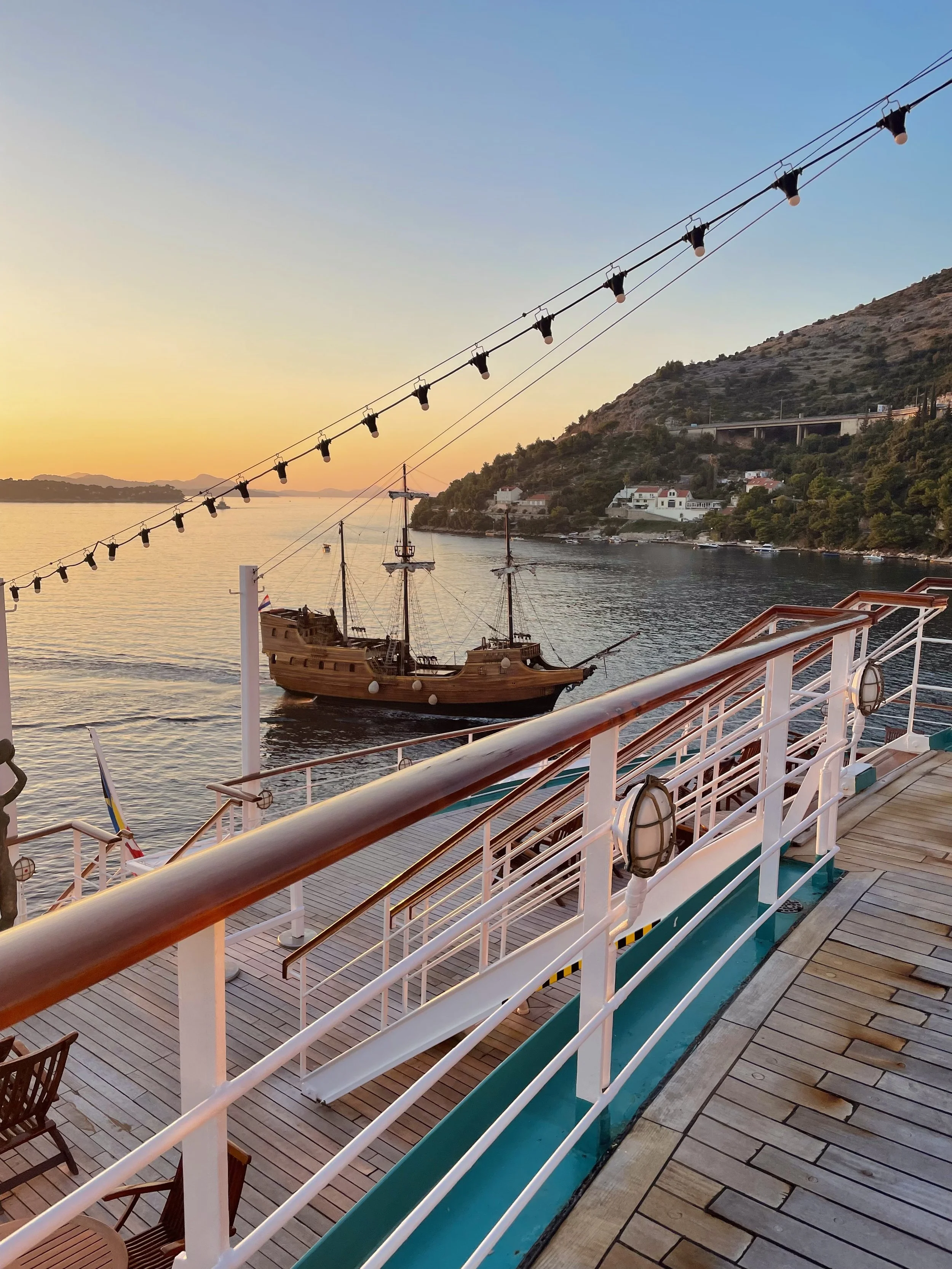

My Experience
My experience was unique in a number of ways. For one, I had an amazing roommate. Similar to college, roommate matches were all over the board in terms of some people getting along super well and others not. I was lucky enough to have my number one Semester at Sea friend and confidant as my roommate. The cabins on board are very small for students, Practically the size of a generous walk-in closet. It would have been a much more difficult journey without Kira.
I was also afforded special opportunities because of my scholarships. I applied to every scholarship I fit the criteria for and ended up receiving a merit scholarship, IMPACT Cohort scholarship, and student assistant scholarship. This allowed me to not only get money towards this expensive experience but I also then got work experience in the field office and did some free traveling with the cohort as part of my acceptance.
Pros + Cons
Pro: I’ll start with the obvious, Semester at Sea is a once in a lifetime experience. There are very few programs where you can travel ten countries in a four month time span. Not only travel, but also being able to learn and work while doing so, which is such a unique opportunity.
Con: It’s incredibly expensive, especially once you add the cost of in-port travel. I cut costs by applying to as many scholarships as possible (highly recommend this!), staying on the ship when we were in-port rather than a hostel or hotel, and deciding to choose a cabin without a window.
Pro: Semester at Sea is a great resume builder. It allows employers to see how much of a problem solver, how culturally competent, and adventurous you are.
Con: The homesickness is real. In college, I was never someone who got homesick. I often had to be persuaded to go home while in school because I wanted nothing more than to stay on campus with friends. It’s much harder to fight homesickness in the middle of the ocean without phone service or even email at times.
Pro: While the ship is in port, people can choose to go on Semester at Sea sponsored programs in-country or choose to travel independently. This allows some flexibility for a voyager who wants to explore a country but is worried about making friends or safety. The only flaw is that each program someone takes costs extra.
Con: There were some student voyagers on Semester at Sea mainly for the ‘aesthetic’ and Instagram posts rather than the actual travel experience and learning opportunities. It’s unavoidable, we live in the age of the influencer, and there are people who have become popular online through Semester at Sea, so there’s naturally a draw to having something in your life to glamorize for an extended period of time.
There were also some people on board who were mainly interested in going out and doing drugs. Yes, there is random drug testing on board. Yes, some people didn’t care. The amount of voyagers who risked getting selected and released from the program was astounding. This was of thinking sometimes made it difficult to find people to travel with who didn’t want to spending most of their time drinking and exploring the nightlife.
Pro: The staff and faculty were amazing on my voyage! Not only were they incredibly supportive and knowledgeable, but I still keep in touch with my bosses from the Field Office to this day. They were amazing mentors for me when I was looking to learn more about the hospitality industry. Every cabin also has a cabin steward. Someone who takes out the trash in your cabin, makes your bed, etc. While someone picking up after you is strange at first, it’s amazing to stop, chat, and get to know them over the four months. My roommate and I were able to decorate our cabin for our steward’s birthday and it was such a fun surprise. Note that the staff/faculty often rotate from voyage to voyage to avoid burnout.
Con: Ship food isn’t ideal if you don’t like plain pasta and potatoes. The dining hall meals are very repetitive, which makes sense considering it’s hard to feed a large group of people for long stretches of time in the middle of the ocean. The freshest food is not always the best option if you’ll be storing food on a ship for two weeks. That being said, things like soda, candy, pizza, and fries can only be bought for an extra price over and above the cost of the program.
Advice + Things to Keep in Mind
Transferring Credits
If you are certain Semester at Sea is something you want to do, be sure the college of your choice has partnered with them in the past and the credits you earn aboard your voyage actually count. As a post-graduate, I didn’t have any credits transfer since I already earned my undergraduate degree. The pro of my situation was that I was able to select whichever classes interested me most because I didn’t have to worry about transferring credits. I knew undergraduates that unfortunately weren’t able to transfer anything. If you’re reading this as someone currently enrolled in college, the Humanities and general credit courses are the best ones to save for Semester at Sea unless you are working towards a broad major like Business Administration or Communications.
When To Go
If you feel mature enough to take the journey, do it as soon as you can. I wasn’t expecting how young the people on board the voyage would be. I went as a twenty-two year old and turned twenty-three during the semester and I was definitely older than almost every other student. There were roughly five hundred students on board and only twenty of them had graduated college already. The only exception I have to this rule is I would not recommend going on the voyage as a freshman still establishing a strong friend group and getting used to college, the FOMO is real.
Embracing the Unknown
There’s a lot of unpredictability on Semester at Sea. Every voyage gets an itinerary but that doesn’t mean that’s where you’ll end up as planned. Something like someone on board needing medical attention, bad weather, politics, etc. can make the planned itinerary change at a moments notice. Typically those types of changes are for the best, but it can be frustrating. It’s important to be aware of those possibilities.
Internet was another unpredictable factor of the ship. During the first two months, voyagers had no issue emailing friends and loved ones back home using their Semester at Sea Gmail accounts. This was vastly different from the third and fourth months. There came a time without warning where Gmail didn’t work at all anymore. This can be difficult, whether you’re looking to email your Global Studies professor or hoping to check-in with family.
Glamorization
While this program is unique and has it’s truly awe inspiring moments, it’s important to remember all the Semester at Sea student vlogs and social posts are glamorized. They would never post COVID outbreaks, exam stress, or travel planning difficulties.
Safety
One of the draws of the program is that Semester at Sea has your back and they serve as a safety net of some sort. Before every country, voyagers are given a ‘green sheet’ with safety information, emergency phone numbers, and so on. This seems great, however there were two times in an emergency situation I tried to use the help numbers to no avail. The first time the phone number printed was incorrect and another time there were issues picking up a call due to phone plans and new countries. While none of these issues on the program side were purposeful, it’s still important to know that voyagers need to be able to think on their feet and problem solve independently.
There were ups and downs throughout my Semester at Sea experience, but I look back on it fondly. I met so many new people and learned so much about other cultures. I was able to travel around the world respectfully and open minded to learn, and my worldview has changed vastly because of it. I am so grateful for the opportunity.
To learn more from the program page, click the link here.